


How CMHA Durham Added 2 Private Counselling Rooms Without a Renovation
No permits. No trades. No construction. Two soundproofed rooms were staged overnight, installed by morning, and holding client conversations the same day, inside a leased, donor-funded space.
01The Organization
Where Every Conversation Matters
The Canadian Mental Health Association is one of Canada's most established and trusted mental health organizations, with branches operating in communities from coast to coast. In Durham Region, the branch runs the Yes Collaborative, a multidisciplinary program providing housing support, addiction recovery services, and mental health care to some of the region's most vulnerable people.
The work is deeply human. A case worker supporting someone through a crisis. A counsellor navigating a sensitive disclosure. A team coordinating care for a person in need. In this setting, the room is never just a room. The environment is part of the care itself.
02The Challenge
The Work Was Private. The Space Was Not.
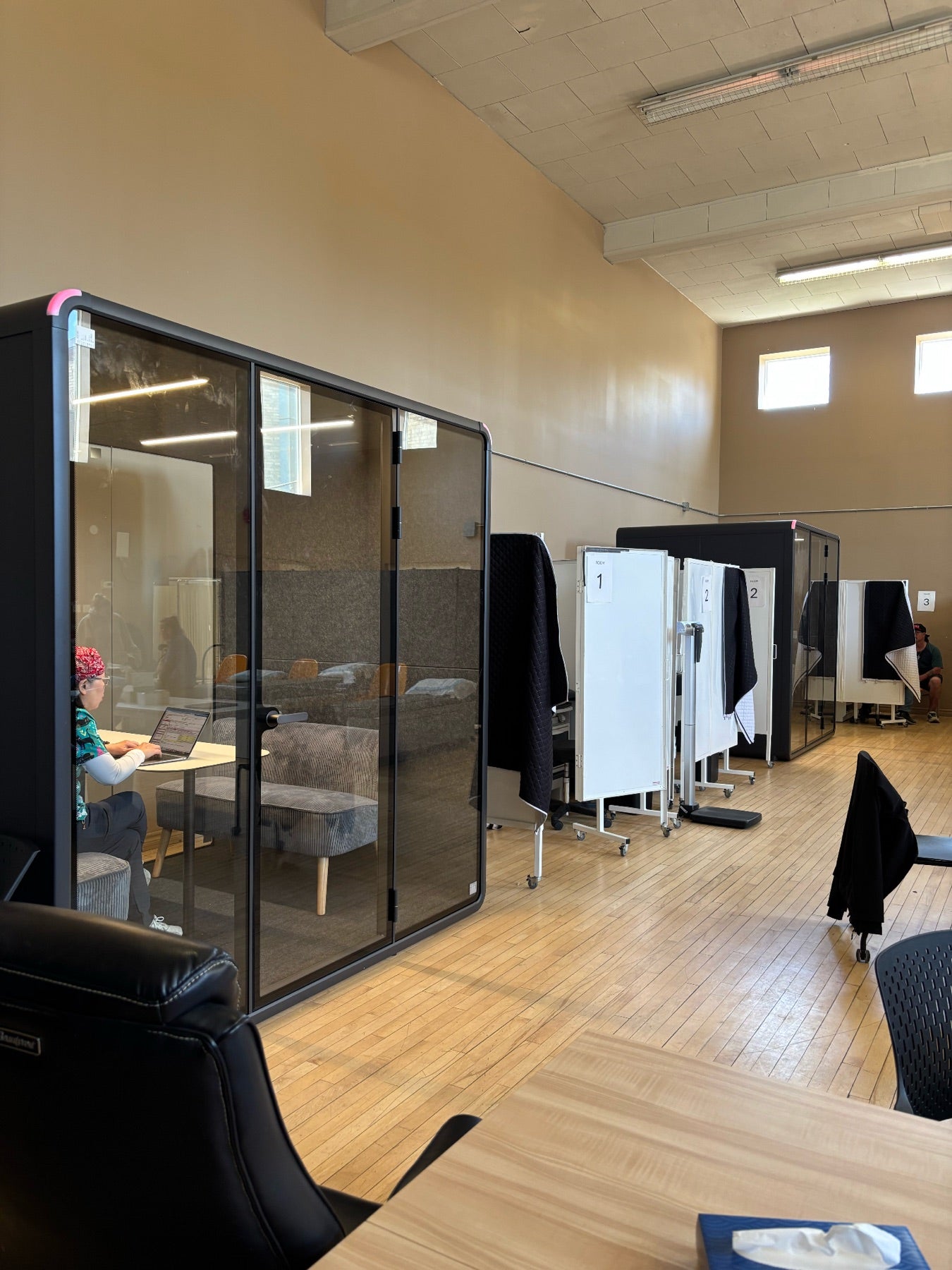
Like many non-profits, CMHA Durham operates in leased office space that was never designed for confidential care work. The layout is open plan, which keeps costs responsible but leaves sensitive conversations within earshot and focused work exposed to constant interruption.
A renovation was never a realistic answer. The building is leased. The budget is donor-funded. The programs cannot pause for construction. What the team actually needed was:
- Genuinely private, soundproofed space for confidential client conversations
- A cost that a non-profit budget could responsibly carry
- No building permits, no electrical work, and no changes to a leased building
- No pause in the programs running around the installation
The Transformation
The Same Office, Working Differently
03The Solution
Two Booths. One Morning. No Construction.
CMHA Durham chose two Quiet Cabins Collaborative booths for the Yes Collaborative site on Bond Street West in Oshawa. Each booth is a fully soundproofed, plug-and-play room that sits directly on the existing floor. It plugs into a standard outlet, is classified as furniture rather than construction, and asks nothing of the building around it.
That distinction is what made the project possible. No permits to file. No trades to schedule. No walls to open. The office CMHA leased on move-in day is the same office today, just with two private rooms standing in it.
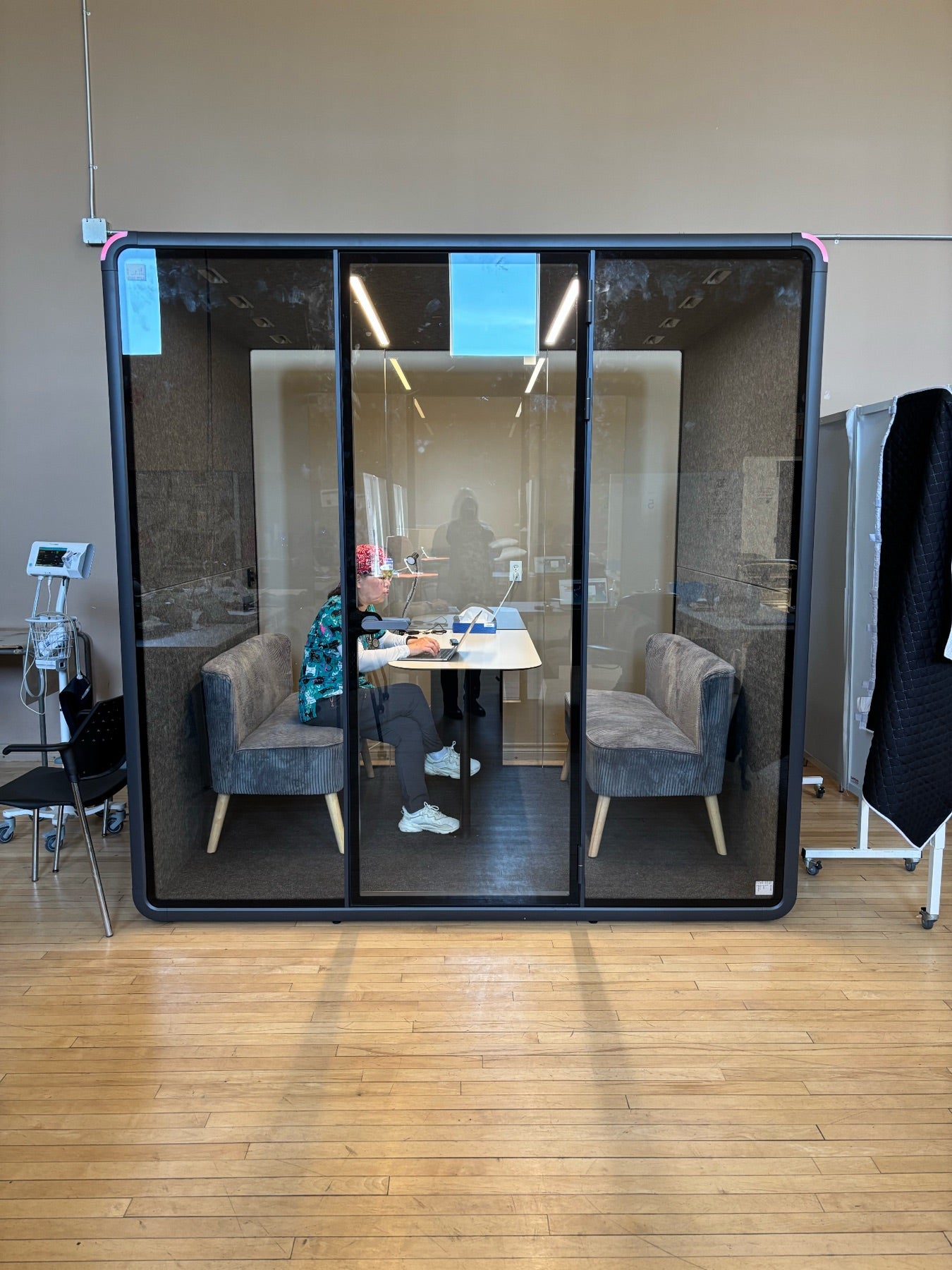
Both booths arrived and were staged after hours, so no session was interrupted.
Professional assembly on site, finished before the day's programs began.
Staff held their first private client conversations inside the booths.
Built for Care Environments
What Each Feature Means in a Care Environment
Full acoustic soundproofing
Client conversations stay completely private, which is essential for trauma-informed care.
Standard 120V plug and play
No electrical permits or trades required in a leased non-profit space.
Classified as furniture
No modifications to the building, which matters for organizations that do not own their premises.
CSA approved components
Meets Canadian safety standards and is suitable for professional and institutional use.
White glove delivery and assembly
Staged the evening before and installed the next morning, with zero disruption to programs.
Up to 4-year limited warranty
A dependable, long-term investment appropriate for donor-funded purchases.
04The Outcome
What Changed for the People Doing the Work
The booths are now part of the daily rhythm of the Yes Collaborative. Staff hold private client conversations, complete focused documentation, and run small group sessions without the anxiety of being overheard or interrupted. The open floor around them keeps working exactly as it did before.
The deeper change is harder to photograph. When a client sits down for a difficult conversation, the room itself now says the same thing the organization does: what you share here stays here. For an organization built on trust, dignity, and care, that is not a luxury. It is the work.
For organizations doing sensitive, people-first work, the environment is part of the care. Quiet Cabins understood that.
Administrative Lead, CMHA Ontario
For Donors & Decision Makers
Why the Environment Is Part of the Care
Donations to mental health organizations are usually directed toward programs and people, and rightly so. But the physical environment where that work happens shapes its quality. A private, professional space enables better care, protects client dignity, and supports the well-being of the staff who carry this work every day.
Privacy is not a perk in a mental health environment. It is a clinical requirement. A Quiet Cabins booth delivers that privacy without the cost or disruption of a renovation.
Ready to Create Space for the Work That Matters
Whether you are a non-profit administrator, a facilities manager, or a donor looking to make a meaningful and practical contribution to a mental health organization, Quiet Cabins is ready to help. We work directly with non-profit and institutional clients across Canada and understand the constraints of mission-driven organizations.